Is Lazarus Group the biggest threat to crypto in this bull market?
Web3 safety specialists take into account North Korea’s Lazarus Group probably the most outstanding and complex risk to the crypto business in 2024.
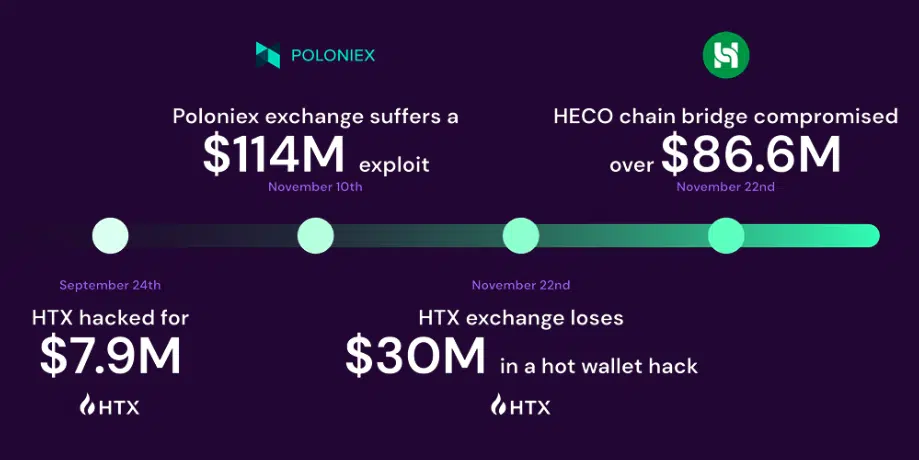
Earlier this week, the notorious Lazarus Group reportedly funneled $12 million by means of crypto tumbler Twister Money. The funds have been allegedly linked to final November’s HTX and Heco Bridge hack, which noticed the platforms lose over $90 million.
Nonetheless, this wasn’t the group’s solely heist in 2023. All year long, the North Korea-backed hackers compromised over $400 million value of property throughout numerous crypto platforms, together with CoinEX, Poloniex, Stake.com, and Atomic Pockets. In 2022, the group was answerable for the largest defi hack in historical past, because it compromised the Ronin Community to steal roughly $620 million.
Lazarus’s hacks occurred throughout a chronic bear market within the crypto business, reeling from the consequences of FTX and Terra Luna’s collapse. In 2024, with the bull market operating in full swing, vital tokens reaching all-time highs, and novel meme cash driving billions of {dollars} influx into the market, Lazarus’s considerations are extra outstanding than ever.
To grasp how the business ought to put together for such dangers, crypto.information reached out to web3 safety supplier Cyvers, which completely detected the Poloniex hack final yr.
How does Lazarus perform its million-dollar crypto heists?
In line with Cyvers CEO Deddy Lavid, the Lazarus Group has shifted its cyberattack methods considerably in 2023, concentrating on centralized entities with a refined and dynamic strategy. Transferring past conventional phishing and brute drive strategies, the group now employs AI-driven phishing campaigns and complicated good contract exploits.
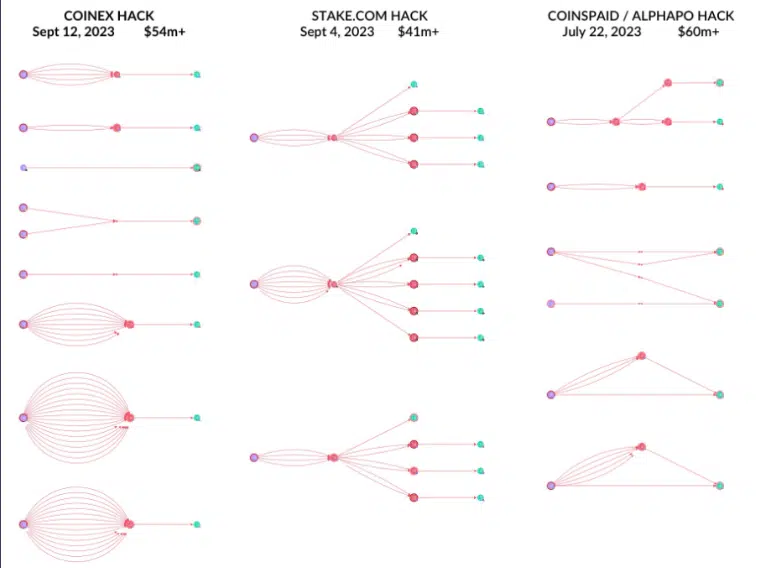
Particularly, the assaults on Poloniex and HTX centered on stealing non-public keys and launching a collection of small assaults in a brief interval. The group additionally used pre-programmed bots to run automated assaults. The bots are likely to reside in a system for a very long time undetected earlier than beginning to exfiltrate the property.
Lavid additionally talked about that Lazarus Group’s operational strategies resemble army precision, reflecting a uncommon stage of professionalism amongst cybercriminal syndicates. Lavid outlines a recurring sample of their assaults: preliminary infiltration by means of social engineering, remaining dormant throughout the goal group for months, and stealing non-public keys for a collection of fast, well-orchestrated assaults involving dry runs and quick, anomalous transaction charges.
The preparatory part is adopted by dispersing the stolen property throughout a number of blockchains, finally funneling them by means of mixers or exchanges for laundering.
So, whereas the crypto bull run of 2024 affords an exhilarating prospect for traders and innovators alike, it additionally presents an pressing name to arms for the safety sector.
“My evaluation emphasizes the necessity for elevated safety measures within the cryptocurrency and blockchain area, urging a deeper recognition of data safety’s significance, a name for extra safety professionals, and a give attention to proactive assault prevention.”
– Deddy Lavid, CEO at Cyvers
In 2024, Lavid foresees a crypto market that outgrows its nascent vulnerabilities to undertake a extra mature strategy to safety.
Crypto platforms have to allocate larger assets in direction of creating safety experience inside corporations and a holistic technique that preempts assaults and comprehensively addresses potential fraud throughout the blockchain.